What is Drawing?
Drawing is one of the most fundamental forms of visual expression, serving as the basis of almost all artistic disciplines. It involves creating marks on a surface to represent ideas, objects, emotions, or observations. As both a technical skill and a creative practice, drawing allows artists to study form, explore concepts, and communicate visually without the need for complex tools or advanced mediums. Throughout history, drawing has been used for everything from architectural planning and scientific illustration to fine art and personal sketching, making it one of the most versatile and enduring artistic practices. Click the icon at the top left to access our library of drawing tutorials.
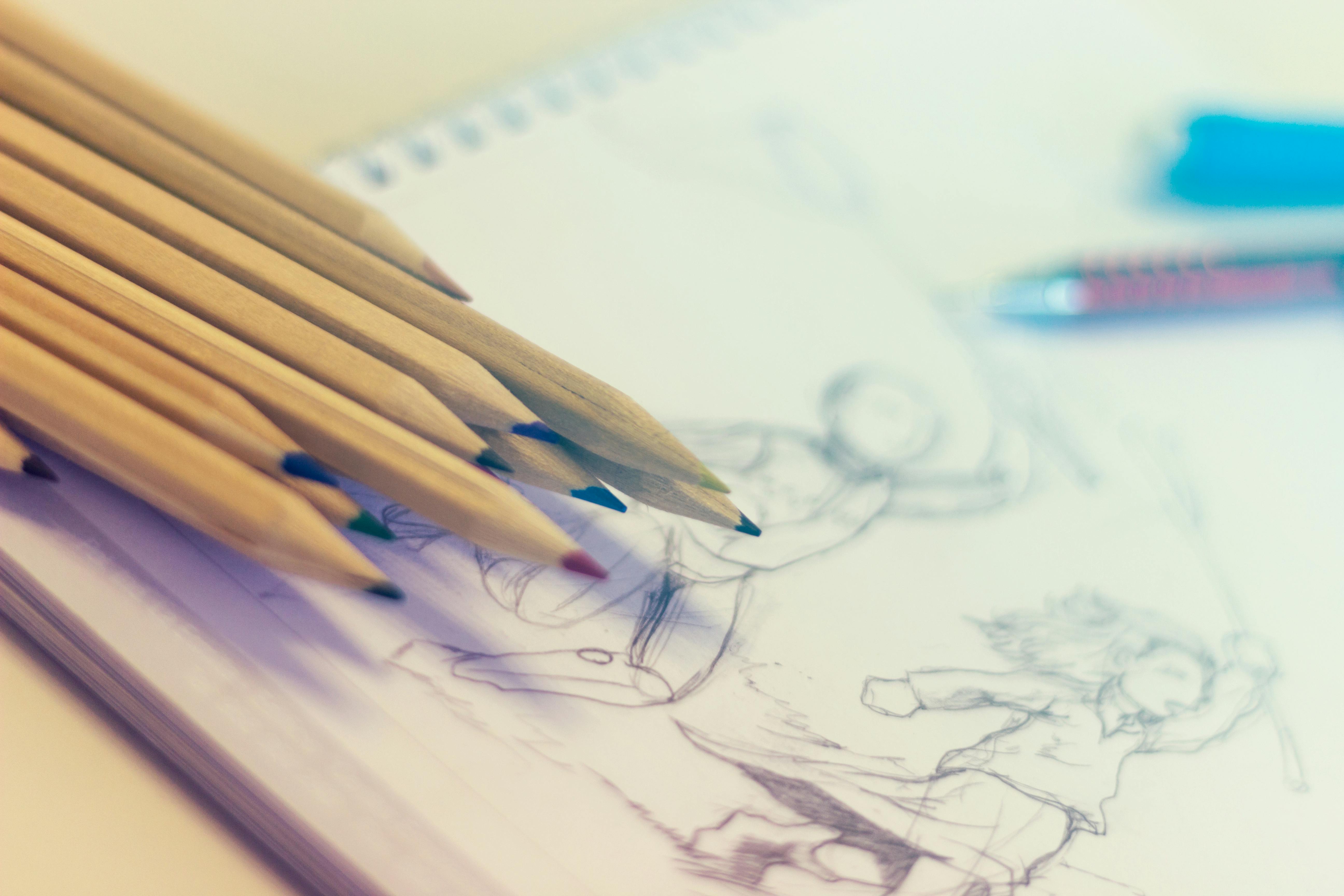
The materials used in drawing vary widely depending on the style, goal, and experience level of the artist. Traditional tools include graphite pencils, charcoal sticks, colored pencils, ink pens, markers, and pastels. Many artists also use blending stumps, erasers, rulers, and specialized paper suited for different textures and shading techniques. Surfaces can range from smooth sketch paper to textured drawing pads or even toned paper for highlighting values. While the materials themselves are simple, mastering their use requires an understanding of pressure, line quality, and the relationship between tool and surface.
There are many types of drawings, each offering unique purposes and aesthetic qualities. Observational drawing focuses on capturing real-life subjects with accuracy, while gesture drawing emphasizes movement, emotion, and form through quick, expressive lines. Technical drawing requires precision and exact measurements. Concept art and illustrative drawing blend imagination with technique to develop characters, environments, and narratives. Other popular types include contour drawing, still life, portraiture, and figure drawing, all of which help artists refine their skills and develop a personal style.
Artists also rely on a wide range of techniques to enhance the depth, realism, and expressiveness of their drawings. Shading methods like hatching, cross-hatching, stippling, and blending allow for smooth transitions of light and value. Perspective techniques help create the illusion of space and distance, while composition principles guide the arrangement of elements within a drawing. Some artists experiment with mixed media, combining ink with watercolor or layering graphite with charcoal for richer textures. These techniques not only expand the creative possibilities of drawing but also demonstrate how versatile and adaptable the medium can be across different artistic disciplines.